Introduction
When I shipped my first export consignment, I had a vague idea that someone called a "freight forwarder" would handle the logistics. What I did not understand was just how much that person would actually do — and how dramatically the quality of that one relationship would affect the smoothness of my entire export operation.
A good freight forwarder is simultaneously your logistics manager, your customs specialist, your documentation coordinator, and your problem-solver when things go wrong at the port. A bad one is the single fastest way to miss a critical shipment deadline, generate a defective Shipping Bill that blocks your GST refund for months, or find yourself arguing with a shipping line about missing containers while your buyer's production line waits.
This guide explains exactly what a freight forwarder does, how they differ from a CHA (Customs House Agent), what services you should expect and what you should pay, and — most importantly — how to find and evaluate the right one for your specific export operation.
What Is a Freight Forwarder?
A freight forwarder is a company or individual that organises the transportation of goods on behalf of exporters and importers. They are not typically the carrier themselves — they do not own ships, planes, or trucks (with some exceptions). Instead, they act as intermediaries between you (the exporter) and the carriers, port operators, customs authorities, and other service providers involved in moving your goods from origin to destination.
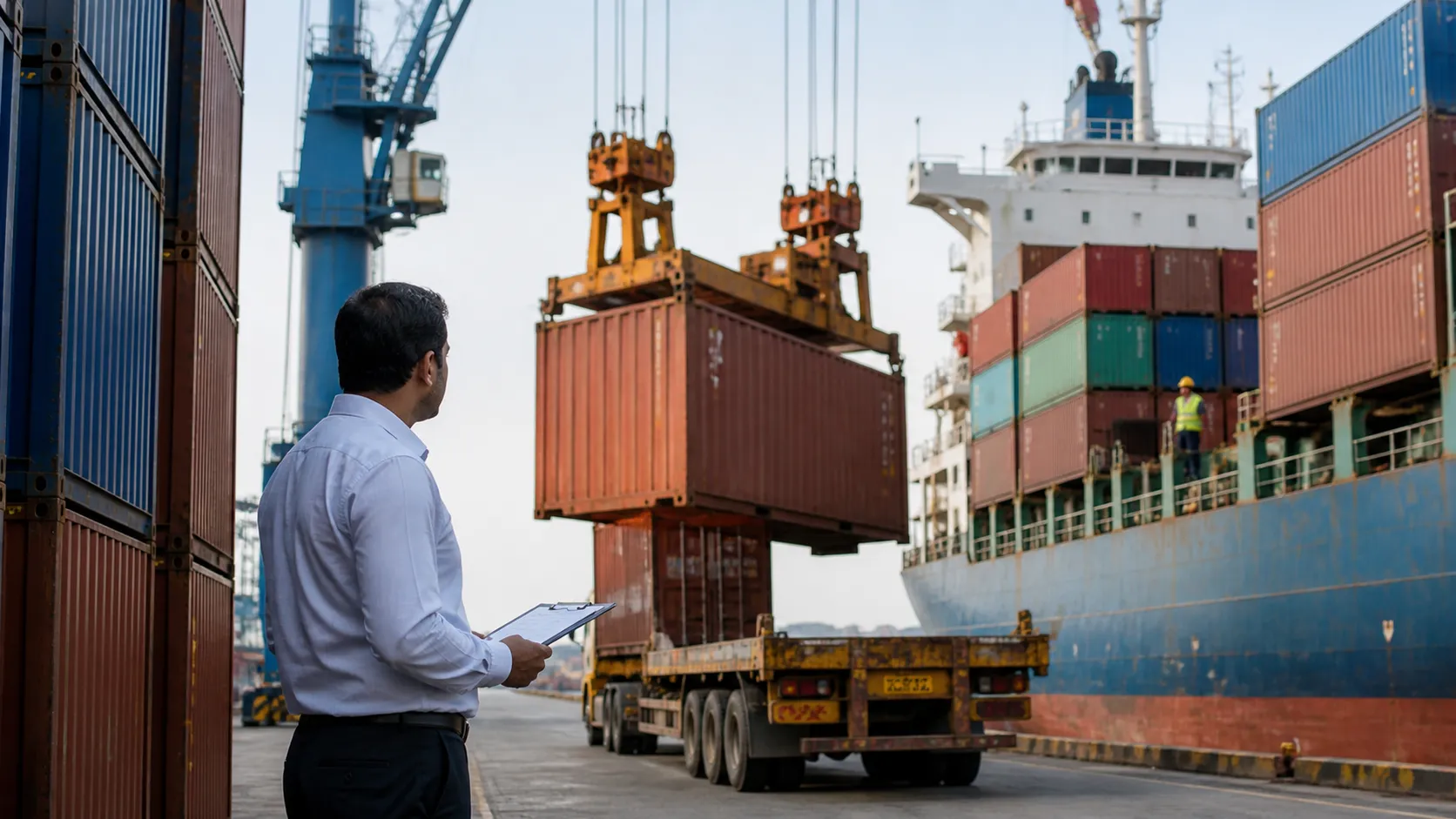
Think of a freight forwarder as the project manager of your shipment. They coordinate the moving parts — booking space with the shipping line, instructing your factory or warehouse on stuffing and documentation timelines, coordinating with the port or ICD for container delivery, liaising with customs through their own CHA licence or a partner CHA, and ensuring the goods arrive at the destination with all the required documents in order.
In Indian export practice, the terms "freight forwarder" and "CHA (Customs House Agent)" are sometimes used interchangeably by exporters — but they are technically different, and understanding the distinction helps you know exactly what service you are engaging.
Freight Forwarder vs CHA: What Is the Difference?
This distinction confuses many new exporters. Here is the precise difference:
A CHA (Customs House Agent) is a licensed professional who is authorised by the Central Board of Indirect Taxes and Customs (CBIC) to transact business relating to the entry or departure of goods at a customs station. The CHA licence is the legal authority to file Shipping Bills on ICEGATE on your behalf. Without a CHA licence, nobody can legally file your export Shipping Bill. CHAs are regulated under the Customs Brokers Licensing Regulations, 2018.
A Freight Forwarder provides a broader range of logistics services — cargo booking, space reservation, documentation coordination, inland transport arrangement, insurance, and sometimes customs clearance. Freight forwarders may or may not hold a CHA licence themselves. Many full-service freight forwarders have their own in-house CHA team or a CHA partner company through which they file Shipping Bills.
In practice:
- A CHA-only service provider handles customs clearance and documentation but does not arrange the ocean or air freight booking. You book the freight separately.
- A freight forwarder with CHA services handles both — they book the space with the shipping line, coordinate documentation, and handle customs clearance through their CHA team. This is a one-stop service and is the most common arrangement for exporters who want a single point of accountability.
- A freight forwarder without CHA handles logistics but uses a third-party CHA for customs filing. You may deal with two separate entities for the same shipment.
For practical purposes as an Indian exporter: look for a freight forwarder who has their own CHA capability — either in-house or through a closely integrated partner. This gives you a single point of contact for your shipment from factory door to vessel departure.
What Does a Freight Forwarder Actually Do for You?
The scope of a freight forwarder's services spans the entire export logistics chain. Here is what a full-service freight forwarder should handle for you:
Pre-Shipment Services
- Freight rate quotation: Getting competitive rates from shipping lines or airlines for your specific route, weight, and volume. A good forwarder has volume relationships with carriers that give them better rates than you would get booking directly.
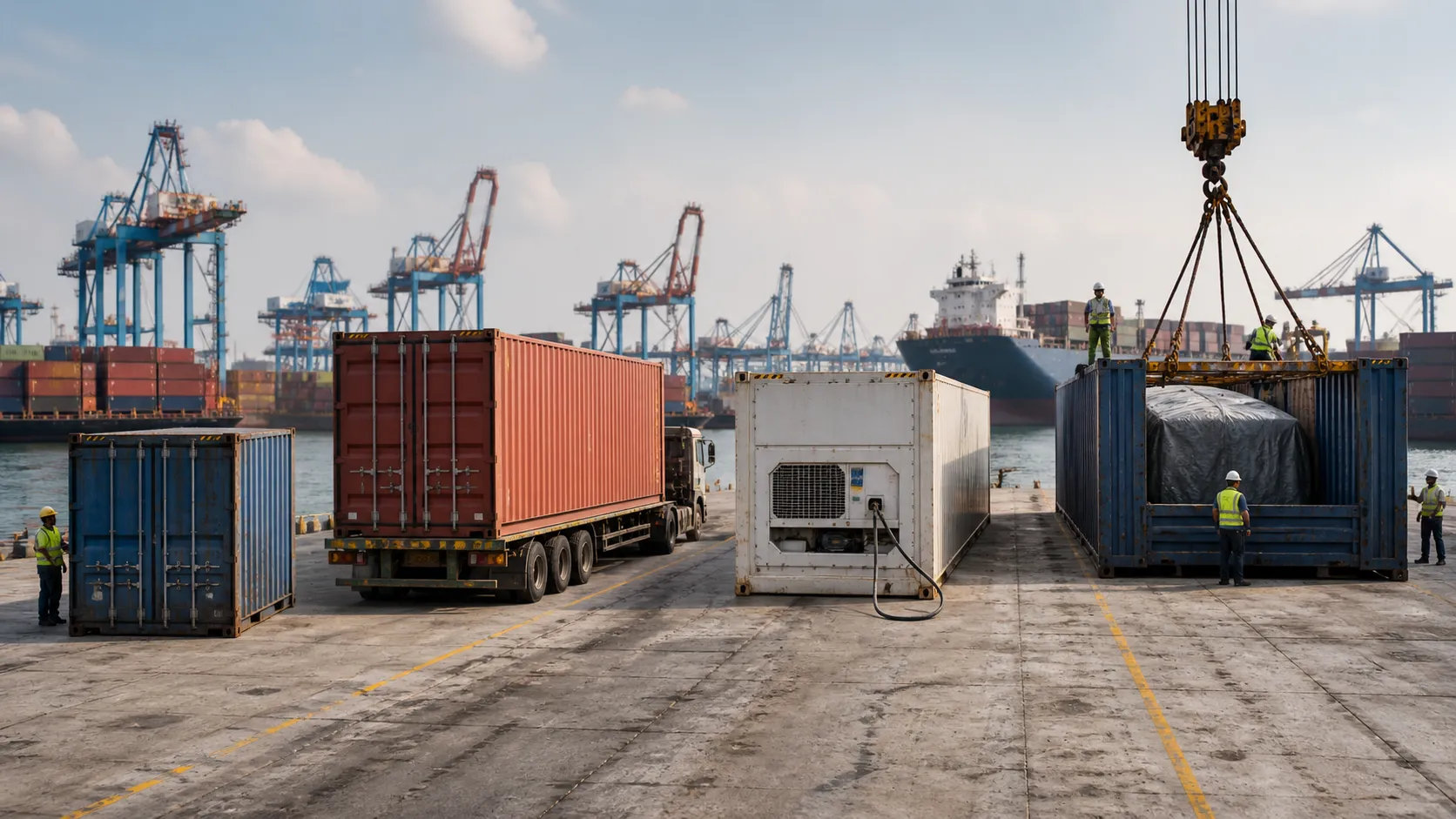
- Container booking: Reserving space on the appropriate vessel or flight for your shipment. Ensuring the container type is appropriate — dry container, reefer (refrigerated), open top, flat rack — for your specific cargo.
- Inland transport coordination: Arranging trucking from your factory or warehouse to the port or ICD. Managing container delivery to your premises for factory stuffing if you prefer to stuff at origin.
- Pre-shipment documentation guidance: Telling you exactly what documents they need from you and by when, based on the vessel's documentation cut-off deadline.
- Packing and marking guidance: Advising on export-grade packing requirements, fumigation requirements for wooden packaging (ISPM-15), and proper marking of packages.
At-Shipment Services
- Shipping Bill filing on ICEGATE: The CHA component — preparing and filing the Shipping Bill electronically, including all product details, HS codes, FOB value, GSTIN, incentive scheme selection (RoDTEP + Drawback), and LUT ARN. This must be filed and Let Export Order (LEO) obtained before the cargo can be moved to the vessel.
- Customs examination coordination: If your shipment is selected for physical examination, your CHA/forwarder coordinates with customs officers and ensures examination happens within the vessel's cut-off window.
- Container stuffing supervision: If stuffing happens at the port CFS (Container Freight Station) rather than at your factory, the forwarder coordinates the stuffing process and container sealing.
- Pre-alert to destination: Sending advance shipment details to the destination agent so they can prepare for arrival.
Post-Shipment Services
- Bill of Lading / Airway Bill issuance: Coordinating with the shipping line or airline for B/L issuance. Reviewing the B/L against your requirements (consignee name, on-board notation, port details) before it is finalised. Providing the B/L to you for LC presentation or direct courier to buyer.
- EGM follow-up: Ensuring the shipping line files the Export General Manifest on ICEGATE after vessel departure. This is critical for your IGST refund and Duty Drawback credits.
- Documentation package: Compiling the full post-shipment document set — Shipping Bill (attested copy), B/L, Commercial Invoice, Packing List, Certificate of Origin, and any product-specific certificates — and providing it to you for LC presentation or direct submission to your buyer.
- Freight invoice: Billing you for all the services rendered and third-party costs incurred (freight, THC, documentation, CFS charges, etc.).
Value-Added Services (from better forwarders)
- Customs classification advisory: Helping you determine the correct HS code for your product and understanding its implications for incentives and destination duties.
- Trade compliance advisory: Flagging any export restrictions, SCOMET considerations, or destination country import requirements for your product.
- Insurance arrangement: Procuring marine cargo insurance for your shipment — particularly relevant for CIF shipments where you are responsible for insurance coverage.
- Destination customs coordination: If you have an overseas office or work with a partner forwarder at the destination, coordinating import customs clearance at the buyer's end.
- Supply chain visibility: Providing tracking updates from vessel departure to destination arrival through their tracking systems.
NVOCC: The Freight Forwarder Who Issues Their Own B/L
You may encounter the term NVOCC (Non-Vessel Operating Common Carrier) when working with freight forwarders. An NVOCC is a freight forwarder who issues their own House Bill of Lading (HBL) to shippers, while holding a Master Bill of Lading (MBL) from the actual shipping line. The NVOCC acts as a carrier vis-à-vis the shipper and as a shipper vis-à-vis the actual vessel operator.
NVOCCs are particularly common in LCL (Less than Container Load) trade, where a single NVOCC consolidates cargo from multiple shippers into one container under a single MBL. Each individual shipper gets an HBL from the NVOCC.
Practical implications for Indian exporters:
- An HBL from an NVOCC is accepted by most buyers and banks for standard T/T payment transactions
- For LC transactions, check whether your LC specifically requires a "carrier's B/L" (which means the shipping line's MBL, not an NVOCC's HBL) — many LCs do, and an HBL may not be acceptable for LC payment
- For customs purposes, the Shipping Bill references the actual container and vessel (from the MBL) — not the HBL number
How to Find a Good Freight Forwarder
The freight forwarding market in India ranges from large multinational logistics companies (DHL Global Forwarding, Kuehne+Nagel, Expeditors, Panalpina) to mid-size Indian companies (Allcargo, Gati, TCI) to small local forwarders operating near specific ports. Each segment has different strengths.
Sources for Finding Forwarders
- Industry association directories:
- FFFAI (Federation of Freight Forwarders Associations in India): fffai.org — member directory of licensed freight forwarders
- ACAAI (Air Cargo Agents Association of India): acaai.org — for air freight specialists
- CBIC CHA Licence Directory: cbic.gov.in — official list of licensed CHAs by customs zone
- Referrals from other exporters in your industry: The most reliable source. Ask exporters in your same product category and similar export volumes who they use and what their experience has been. Logistics is a relationship business — a good forwarder who knows your product and your typical requirements is worth more than the cheapest quote.
- Your EPC (Export Promotion Council): Many EPCs maintain approved vendor lists or can refer freight forwarder members who serve their specific sector.
- Your bank's trade finance team: Banks that handle significant export finance often have relationships with reliable freight forwarders and can recommend one.
Getting Multiple Quotes
For every new trade lane or significant shipment, get quotes from at least 3 freight forwarders. Provide them with:
- Origin (city and specific address or port/ICD)
- Destination (port and final city)
- Commodity (with HS code if possible)
- Dimensions and weight per package, total number of packages
- Total gross weight and volume (CBM)
- Incoterms (FOB, CIF, DAP, etc.)
- Required delivery window or vessel cut-off date
- Whether goods are hazardous (DG status)
Compare quotes on an all-inclusive basis — not just the ocean freight rate. The full cost includes: ocean freight + origin THC + documentation fees + CFS charges (if applicable) + CHA fees + any local charges. A forwarder quoting a low headline freight rate but high ancillary charges may be more expensive than a slightly higher headline rate with fewer add-ons. Always ask for an all-in breakdown before accepting a quote.
How to Evaluate a Freight Forwarder: 8 Questions to Ask
Before committing to a freight forwarder for a new trade lane or a significant shipment, these questions separate professional operators from unreliable ones:
1. Are you a licensed CHA? What is your CHA licence number?
Any freight forwarder handling customs clearance must either have their own CHA licence or work through a licensed CHA. Ask for the CHA licence number and verify it on the CBIC website. A company that is vague about their CHA credentials is a red flag.
2. How many shipments do you handle monthly on this specific trade lane?
A forwarder who handles 50 FCL shipments per month from JNPT to Rotterdam has experience, established carrier relationships, and knowledge of route-specific issues that a forwarder doing 2 shipments per month does not have. Ask specifically about your trade lane — not just overall business volume.
3. Do you handle this commodity regularly? What are the specific compliance requirements?
If you export food products, pharmaceuticals, chemicals, or hazardous goods, your forwarder must be familiar with the specific documentation requirements — phytosanitary certificates, FSSAI certificates, CDSCO permits, DG declarations. A forwarder who handles only general cargo and is vague about your product's requirements is not the right partner for specialised exports.
4. What is your process for RoDTEP and Duty Drawback filing?
Ask this specifically. A good forwarder will proactively tell you that they always file RoDTEP + Drawback Shipping Bills by default and will ask you to confirm your incentive-eligible rates. A forwarder who gives a blank stare or says "that's your CA's job" is a forwarder who will routinely file Free Shipping Bills and cost you significant incentive income.
5. What is your documentation cut-off process? How do you communicate shipment deadlines?
Missed documentation cut-offs mean missed vessel sailings — which can be extremely costly. Ask about their specific process: how many days before vessel cut-off do they need your documents, how do they remind you, and what happens if documents are late. A forwarder with a clear, proactive documentation follow-up process is far more valuable than one who just receives whatever you send and says nothing until it is too late.
6. Can you provide references from two or three exporters in my product category?
Any serious freight forwarder should be able to provide references. Call the references. Ask them specifically: how reliably does this forwarder meet cut-off deadlines? Do they proactively flag compliance issues? How do they handle problems when they arise? Are their invoices accurate?
7. What is your EGM follow-up process after vessel departure?
As discussed in the IGST refund guide, EGM delays are a primary cause of stuck incentive credits. Ask your forwarder specifically: how do they follow up with shipping lines to ensure EGM is filed promptly? Do they track EGM status and notify you when it is filed? A forwarder who handles this proactively saves you hours of chasing IGST refunds.
8. What is your fee structure? Are there any charges not included in the quotation?
Get the full fee structure in writing before engaging. Common "surprise" charges that less transparent forwarders add after the fact: inland haulage charges, CFS stuffing charges, document handling charges, telex release fees, B/L amendment fees. A transparent forwarder will disclose all standard charges upfront. Ask specifically about these categories when reviewing a quote.
What You Should Pay: Typical Freight Forwarder Charges
Market rates vary by location, trade lane, and service level, but here are typical ranges for professional freight forwarder services from India in 2026:
CHA/Customs Clearance Fees
- Shipping Bill filing fee: ₹2,000–6,000 per Shipping Bill (varies by commodity and document complexity)
- Electronic filing charges: ₹300–500
- Examination charges (if physical examination ordered by customs): ₹1,500–4,000
Documentation Charges
- B/L issuance coordination: ₹500–1,500
- Certificate of Origin processing: ₹500–1,200 (plus EPC fee)
- Document compilation and courier: ₹500–1,000
Port/Terminal Charges (passed through at cost)
- THC (Terminal Handling Charges): USD 100–200 per 20ft container (varies by port)
- CFS charges (if stuffing at CFS): ₹5,000–15,000 per container
Ocean Freight (passed through at market rate)
Forwarders earn a margin on ocean freight by booking at contract rates and billing you at slightly higher spot rates — this is a standard industry practice. The margin is typically 5–15% of the ocean freight rate. Good forwarders who move significant volumes often pass competitive rates to clients in exchange for loyal volume.
Professional Service Fee
Some forwarders charge a flat professional service fee per shipment (₹1,500–4,000) covering coordination, communication, and management — in addition to the specific charges above. This is reasonable for full-service arrangements; less so if you are paying specific charges for every individual service.
Red flag pricing: Unusually low quotes (50% below others) typically mean hidden charges added later, services not actually included, or inexperienced operators who will struggle when problems arise. The cheapest freight forwarder is almost never the best value.
Building a Long-Term Freight Forwarder Relationship
The best freight forwarder relationships in export are long-term partnerships, not transactional engagements. Here is how to build and maintain that kind of relationship:
Be consistent: Giving your regular trade lanes to one forwarder rather than constantly shopping for the cheapest rate builds volume that gives your forwarder leverage with carriers — which eventually translates into better rates and priority treatment for your shipments.
Be organised: Provide documents on time, provide complete information with each shipment instruction, and communicate changes in shipment details as early as possible. Forwarders who deal with disorganised clients spend disproportionate time on those clients — and consciously or not, they prioritise organised clients when capacity is tight.
Communicate your requirements clearly once: Create a standard shipment instruction template that you share with your forwarder for every shipment — it should include your GSTIN, IEC, LUT ARN, preferred Shipping Bill type (RoDTEP + Drawback), and any other standing instructions. This eliminates repeated conversations about the same things.
Review their work: Check the Shipping Bill details they file — verify HS code, FOB value, incentive scheme selection. Review the B/L when it arrives — verify shipper name, consignee, port details, on-board notation. A good forwarder will welcome this scrutiny; it demonstrates that you are an engaged client and reduces errors over time.
Give feedback: When something goes wrong — an EGM delayed, a document error, a missed cut-off — address it directly and specifically with your forwarder. Not accusatorially, but factually: "The EGM for our July 15 shipment was filed 12 days after vessel departure and our IGST refund was delayed by 6 weeks as a result. What can we do to ensure this is faster next time?" Good forwarders respond to specific feedback by improving their processes.
Frequently Asked Questions
Can I export without a freight forwarder and handle everything myself?
Technically yes — you can engage a CHA directly for Shipping Bill filing and book freight directly with shipping lines. Some large exporters with dedicated logistics teams do exactly this. For a new exporter or a small-to-medium operation without in-house logistics expertise, attempting to do everything directly adds significant coordination burden and requires knowledge of port procedures, vessel schedules, documentation timelines, and customs processes that takes years to accumulate. The freight forwarder's fee buys you that expertise and coordination. Most exporters are better served by a good freight forwarder than by attempting to replicate their function in-house.
How do I verify that a freight forwarder's CHA licence is valid?
Go to cbic.gov.in → Customs → Customs Brokers → Search for Licensed Customs Brokers. Enter the company name or G-Card number. The search returns the licensee's name, licence number, and whether the licence is currently valid. CHA licences are jurisdiction-specific — a CHA licensed at JNPT can file Shipping Bills at JNPT but not at Chennai without a separate licence (or through a partner). Ensure your forwarder's CHA licence covers your export port.
My freight forwarder charged me for something I did not agree to. What can I do?
First, refer to the written quote you accepted before the shipment. All agreed charges should be in that quote. Any charge not in the quote is a disputed charge — request the forwarder to explain the basis for it. If they claim it is a standard charge that was always implicit, ask why it was not disclosed upfront. For genuine unauthorized charges, withhold payment of the disputed amount, state your dispute in writing, and negotiate a resolution. For repeated disputes with the same forwarder, find a replacement — a forwarder who regularly adds undisclosed charges is not someone you want managing your export logistics.
I have shipments to multiple countries. Should I use one freight forwarder for everything?
It depends on your forwarder's capabilities. Large international freight forwarders (DHL Global Forwarding, Kuehne+Nagel, Expeditors) have global networks and can handle multiple trade lanes from a single India relationship. Smaller local forwarders may be excellent for one or two specific routes but lack presence or relationships for others. A common approach: use a primary forwarder for your main trade lanes where they have proven track records, and use specialist forwarders for specific markets where your primary partner is not strong.
What is the difference between a freight forwarder and a 3PL?
A 3PL (Third-Party Logistics provider) is a broader concept — it includes not just freight forwarding and customs clearance but potentially also warehousing, inventory management, order fulfilment, last-mile delivery, and end-to-end supply chain management. All freight forwarders are a subset of the logistics services market, but not all 3PLs are freight forwarders in the traditional sense. For most Indian goods exporters, a freight forwarder covers your needs. A 3PL arrangement becomes relevant if you want your logistics partner to also manage destination warehousing, B2C fulfilment, or e-commerce order management in the importing country.
Conclusion
A good freight forwarder is not a cost — it is leverage. They bring carrier relationships, port knowledge, documentation expertise, and compliance awareness that would take you years to accumulate independently. They protect your Shipping Bill from the errors that block GST refunds. They follow up on EGM filing so your Drawback and RoDTEP credits arrive on time. They manage the coordination complexity of international cargo movement so you can focus on production, sales, and buyer relationships.
Choose your freight forwarder with the same care you give to choosing key suppliers. Verify their CHA licence. Check their references. Ask the eight questions in this guide. Build a long-term relationship with someone who knows your product, your trade lanes, and your compliance requirements — and who takes personal accountability for getting your shipments right.
The difference between a forwarder who is just doing transactions and one who is genuinely invested in your export success is measurable in fewer delayed shipments, faster incentive credits, and the peace of mind of knowing that the logistics side of your export operation is in competent hands.